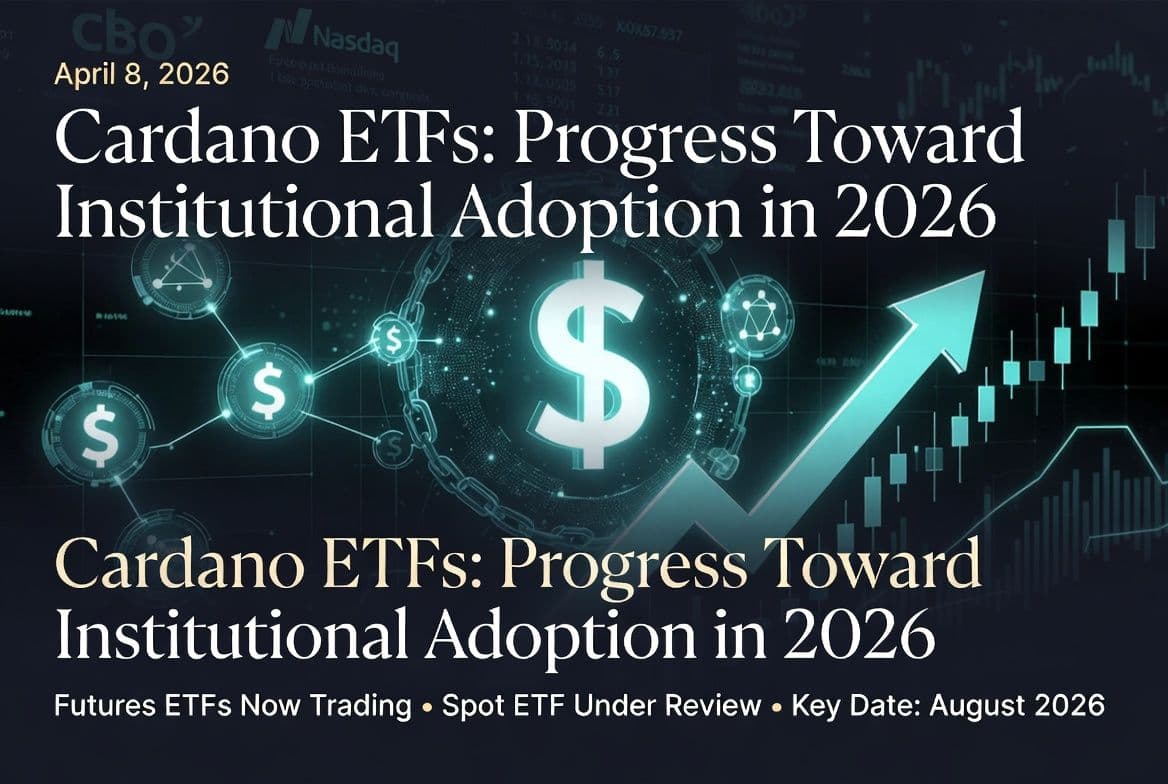
Cardano ETFs: Progress Toward Institutional Adoption in 2026
Futures-based Cardano ETFs are now trading on U.S. exchanges, Grayscale's spot ETF application is under SEC review, and CME futures launched in February create a potential fast-track to spot approval by August 2026. Here's what every ADA holder needs to know.
The Cardano (ADA) ecosystem continues to advance toward greater institutional accessibility. While no spot Cardano ETF has yet been approved by the U.S. Securities and Exchange Commission (SEC), the first futures-based ETFs are now trading, and key regulatory developments are paving the way for potential spot products later this year.
Futures-Based Cardano ETFs Now Trading
On April 1, 2026, Volatility Shares launched two pioneering crypto-linked ETFs providing exposure to Cardano through regulated futures contracts: CRDD (Cardano ETF, 1x daily exposure) and CRDX (2x Cardano ETF, leveraged daily exposure). These products are now actively trading on Cboe BZX and other U.S. exchanges, offering traditional investors regulated access to ADA price movements without the need to hold the cryptocurrency directly. They mark the first exchange-traded vehicles delivering Cardano exposure in the U.S. market.
Grayscale's Spot ETF Application Still Under Review
Grayscale Investments filed an S-1 registration statement in August 2025 for the Grayscale Cardano Trust ETF (ticker: GADA). A corresponding 19b-4 filing was submitted by NYSE Arca. As of April 2026, the application remains under SEC review with no final decision issued. Grayscale's proposal would create a spot ETF that holds actual ADA, providing direct exposure similar to the approved Bitcoin and Ethereum spot ETFs.
CME Futures Launch Creates Fast-Track Opportunity
A major catalyst occurred on February 9, 2026, when CME Group launched Cardano futures contracts in both standard and micro sizes. This development is significant for three reasons: it establishes a CFTC-regulated futures market for ADA; under the SEC's new generic listing standards for commodity-based trust shares, the six-month futures trading history qualifies Cardano for a streamlined spot ETF review process; and the six-month seasoning period ends around August 9, 2026, potentially opening the door for accelerated approval.
For context: Bitcoin took 240 days to reach spot ETF approval after its CME futures launched. Cardano could potentially do it in 75 days under the new generic listing standards — a meaningful shortcut that didn't exist for earlier crypto ETF applicants.
Where Cardano Stands vs. Bitcoin and Ethereum
Bitcoin received spot ETF approval in January 2024, Ethereum in July 2024. Cardano now has regulated futures ETFs (CRDD, CRDX) and CME futures launched February 9, 2026 — placing the earliest potential spot ETF window at August 2026 onward. The path is clearly established; the question is timing and SEC appetite.
What This Means for Cardano and Investors
The arrival of futures ETFs and CME contracts represent important steps toward institutional adoption. Should a spot ETF eventually launch, it could drive significant inflows from pension funds, advisors, and traditional asset managers; increase on-chain liquidity and Total Value Locked (TVL); and support broader use cases such as Real-World Assets (RWA), institutional DeFi, and Bitcoin-Cardano interoperability.
ADA is currently trading in a consolidation range near $0.24–$0.25, with growing whale accumulation and rising futures open interest reflecting optimism around these regulatory milestones.
What to Watch Next
Key catalysts to monitor: SEC decisions on the Grayscale GADA filing and any additional spot applications; trading volume and open interest in CME Cardano futures as the August seasoning deadline approaches; and potential new filings or updates from other issuers. The August 2026 window is the most important date on the Cardano institutional calendar right now.
This article is for informational purposes only. Cryptocurrency markets are highly volatile, and ETF products carry risks. Always conduct your own research (DYOR) and consult a qualified financial advisor before making investment decisions.